Water heaters · Expansion tank
Expansion Tank: Why Do I Need One?
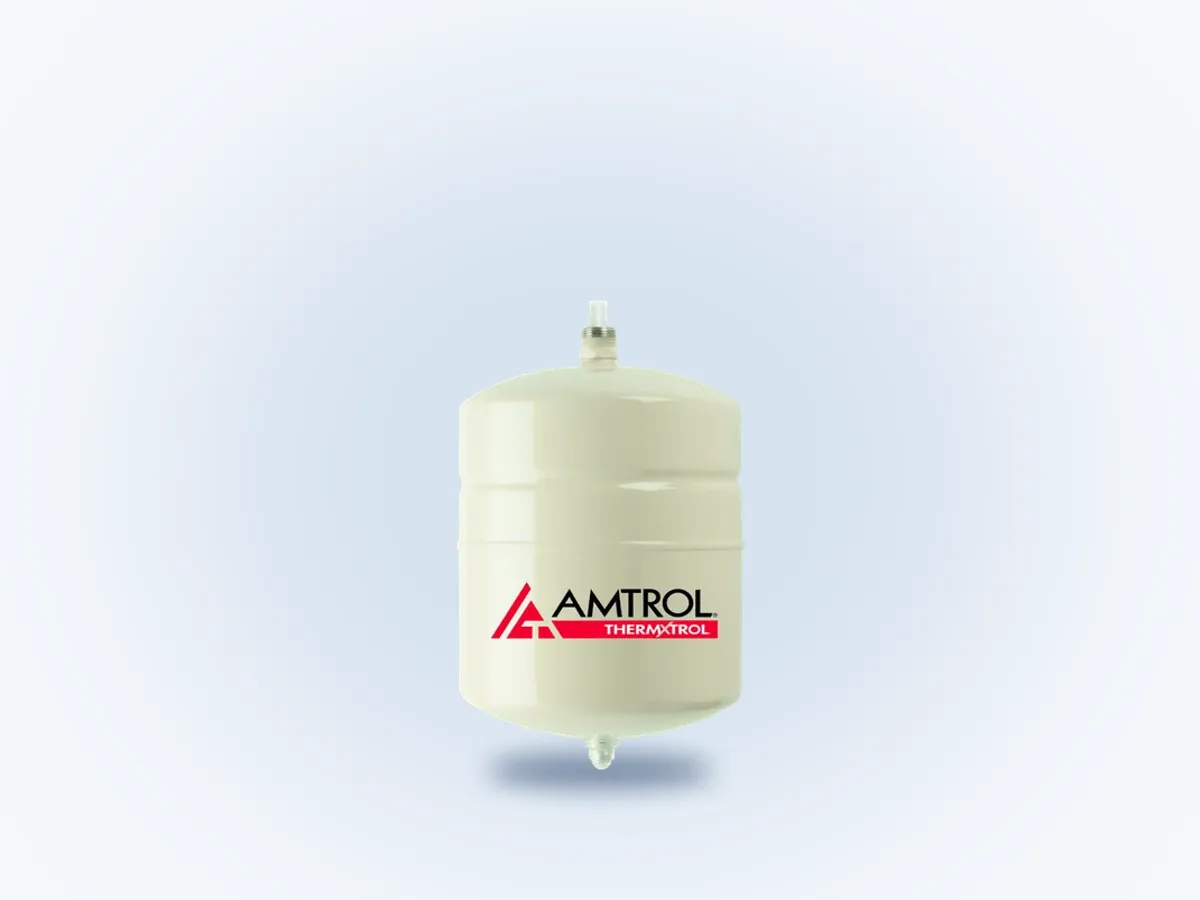
A small steel tank on the cold-water line that absorbs the extra volume of heated water, so pressure in your house does not spike.
-
Same day serviceOne day installation
-

BBB A+ RatingAccredited Business
-
LicensedAZ ROC 335298
-
Family trade since 1856Serving Arizona since 1961
Why an expansion tank
What an expansion tank does.
-
Absorbs expansion
Water expands when heated. A pre-charged rubber bladder inside the tank compresses to take the extra volume.
-
Protects your plumbing
Less stress on the water heater, fittings, supply hoses and fixtures.
-
Meets code
Homes with a pressure-reducing valve need an approved way to control thermal expansion.
Good to know
More about expansion tanks.
Closed systems
City water can flow into the house but cannot always flow back out. A check valve, backflow preventer or pressure-reducing valve (PRV) at the meter restricts reverse flow, and that creates a closed system.
Most Phoenix-area homes on municipal water have a PRV because street pressure often runs high. Plumbing codes (IPC and UPC) treat a PRV like a check valve here: once one is in place, an approved method of controlling thermal expansion is required. An expansion tank on the house side of the valve is the usual solution.
Inside the tank
A steel shell with a pre-charged rubber bladder inside. Water heated by the heater pushes into the tank and compresses the bladder instead of raising the pressure in your pipes.
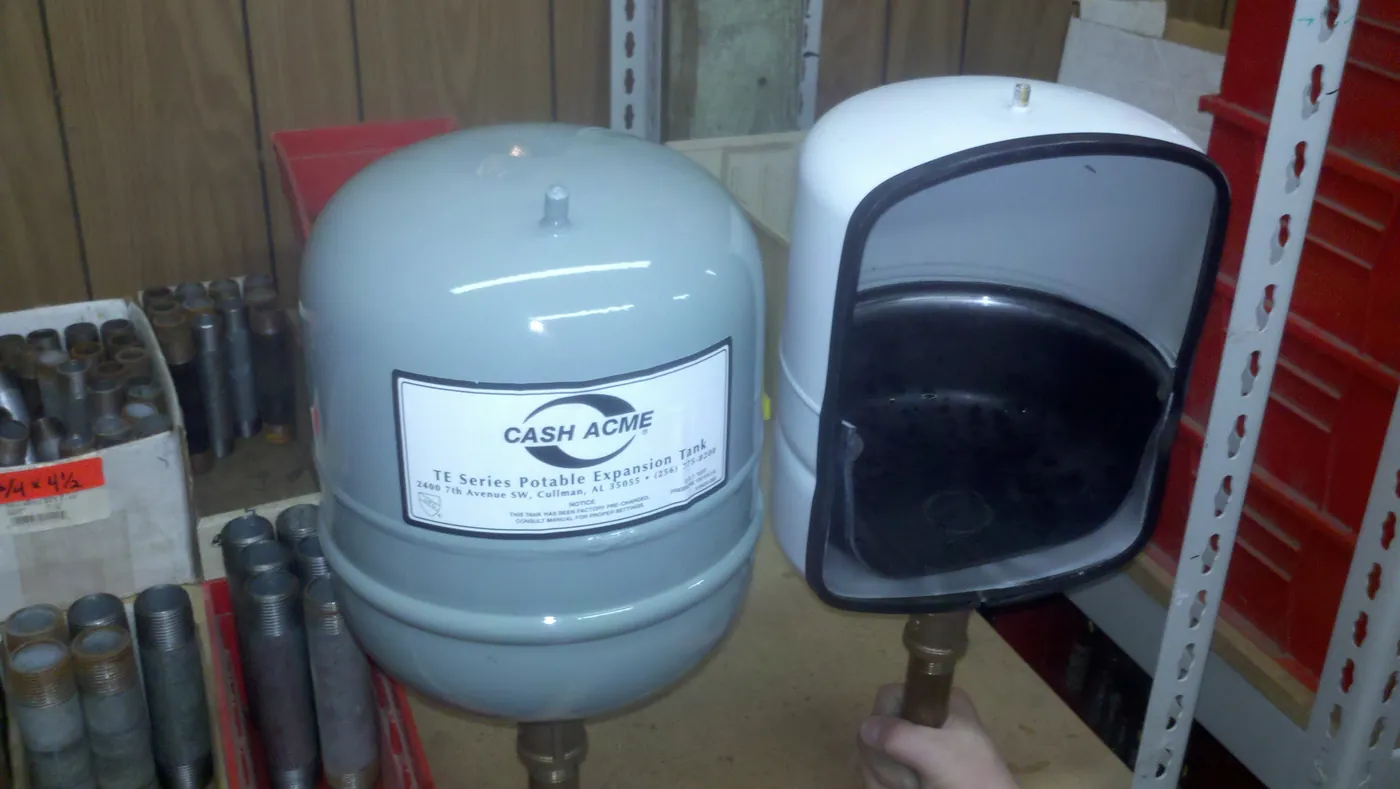 What is inside the expansion tank: a pre-charged rubber bladder in a steel shell
Tank vs. tankless
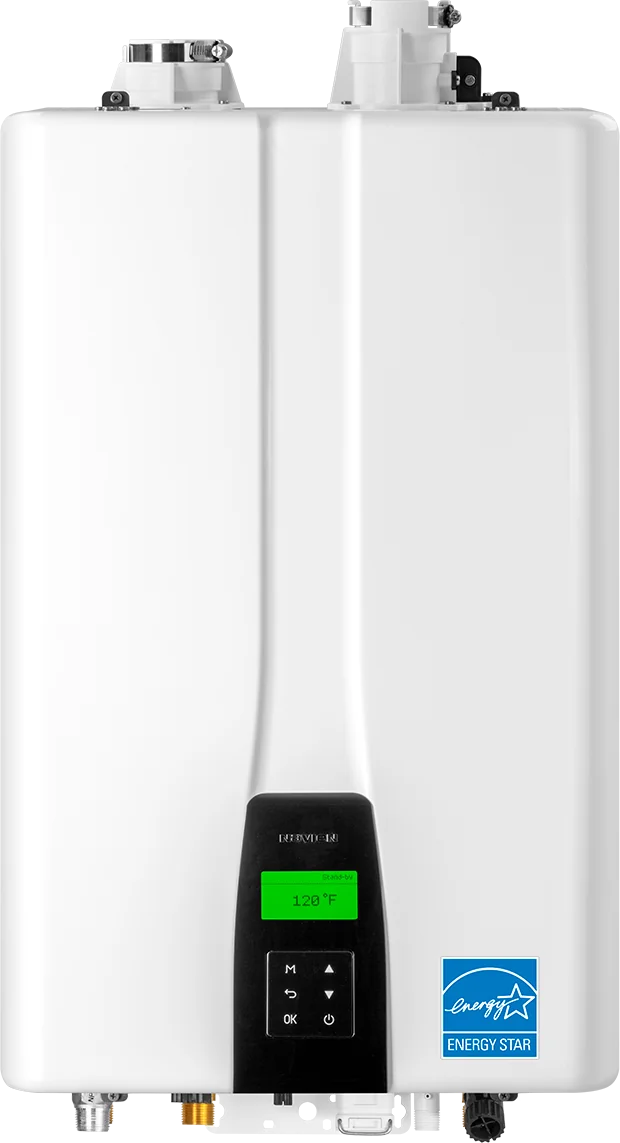
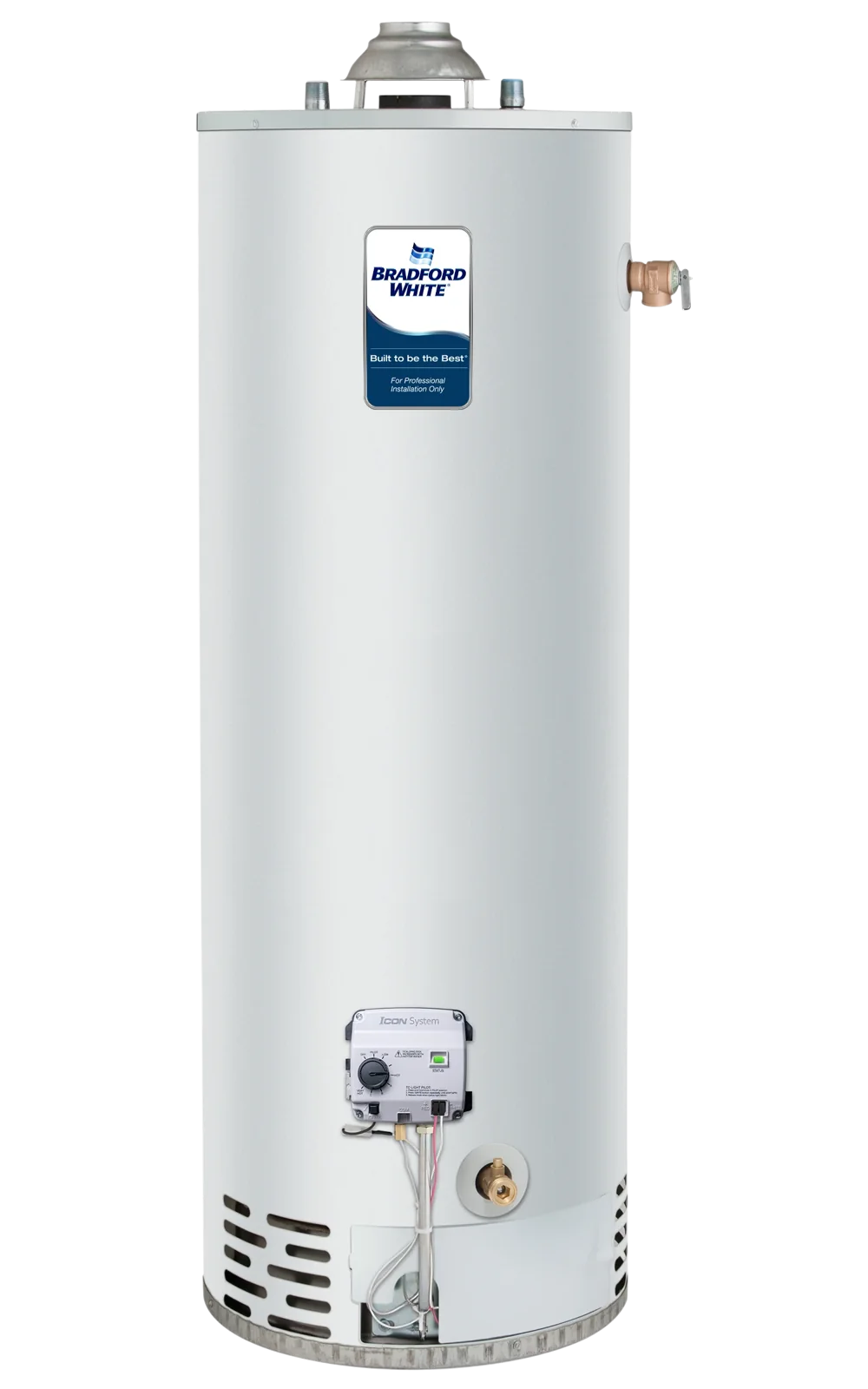
A tank water heater keeps 40 to 50 gallons hot all day, so it produces more expansion. A tankless heats only on demand and produces less on its own, but it still needs an expansion tank when the home is a closed system or a recirculation loop keeps reheating water in the pipes. That is how we install them, and it matches local code in many Arizona jurisdictions.
Warning signs
Watch for these:
- The T&P (temperature-and-pressure) relief valve drips or weeps
- Pipes bang when the heater cycles
- Pressure climbs when no one is using water
The T&P valve is a last-resort safety device, not an everyday pressure control. Repeated dripping lets Arizona minerals collect on it and can seize it. If you see these signs, have the system checked.
Installation
How we install an expansion tank
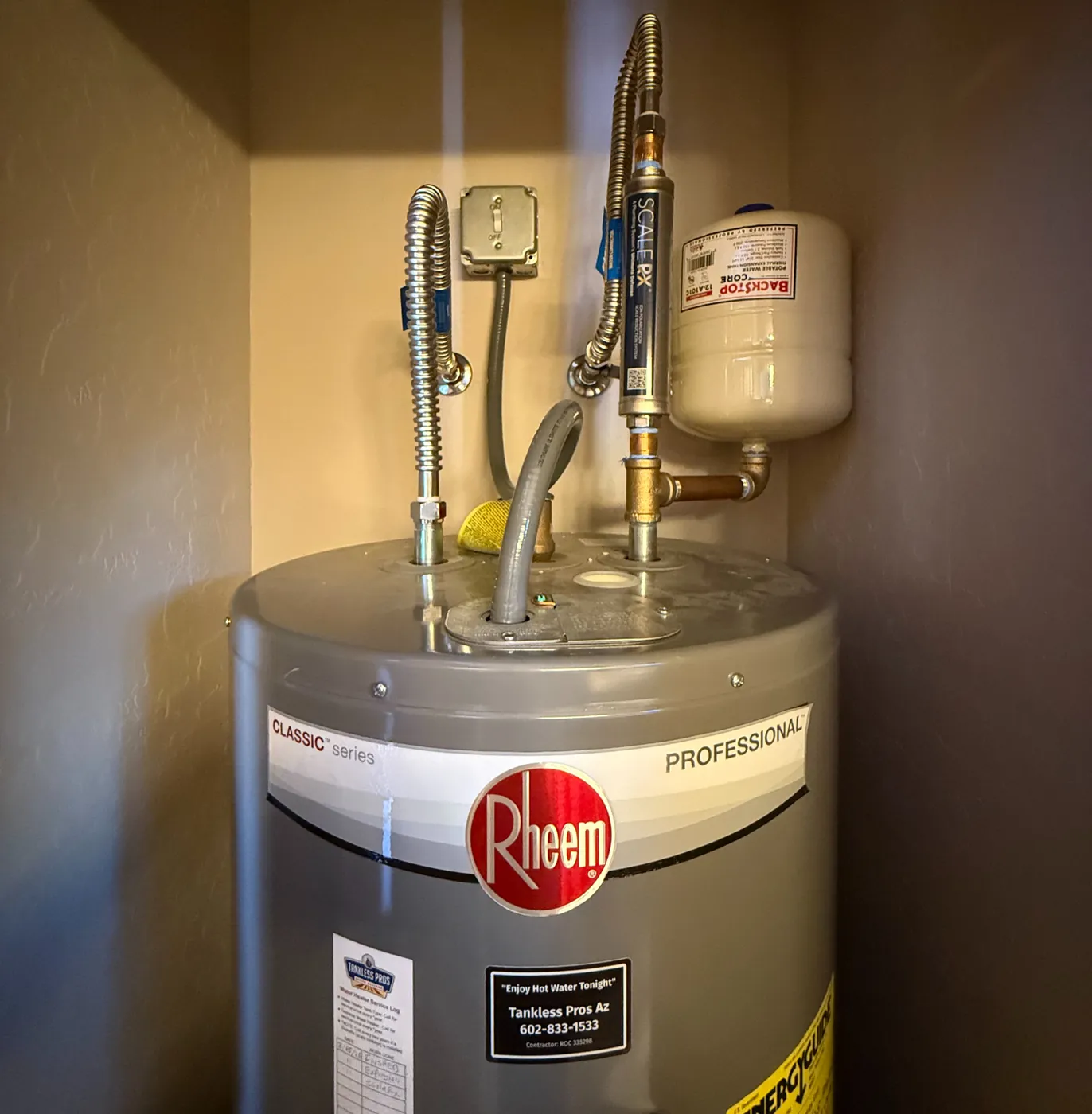
- Installed on the cold-water line at the water heater
- The air charge set to match your house pressure
- Professionally installed by our own crew
Questions
Expansion tank questions.
Not answered here? We pick up the phone Mon - Sat, 7:00 AM - 7:00 PM.
My PRV has a bypass. Do I still need one?
Yes. Many modern residential PRVs have a small integral bypass that allows limited reverse flow. It helps limit how high pressure climbs, but it does not remove the need for an expansion tank. Codes still require one.
Does a home on a well need one?
A private well usually has a pressure tank that absorbs thermal expansion, so a separate expansion tank is usually not required. If extra check valves have closed the system, we check the setup rather than guess.
How is an expansion tank set up?
The air charge in the tank is set to match your incoming house pressure, the pressure on the downstream side of the PRV.
Related
Keep exploring.

Free quote
Have your expansion tank checked.
Quick 15 minute or less reply. Mon - Sat, 7:00 AM - 7:00 PM.