Tankless · Rinnai
Rinnai Tankless Water Heaters
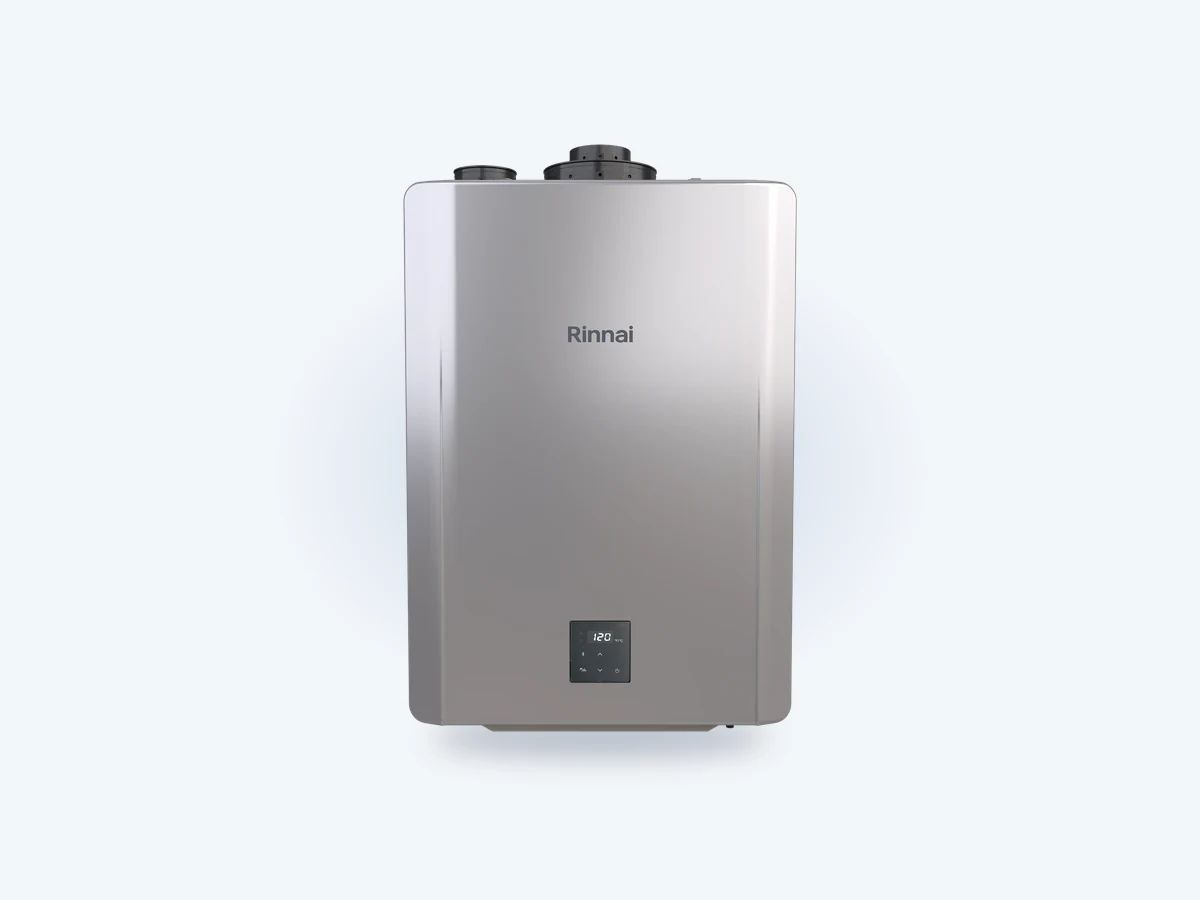
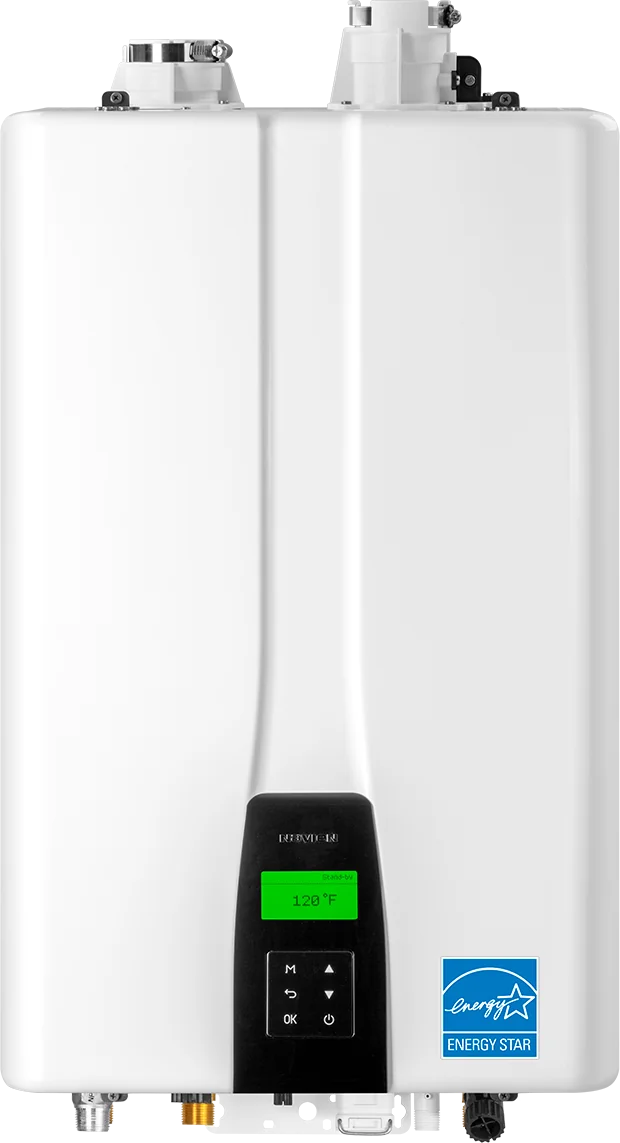
Rinnai gas tankless water heaters, sized by the number of bathrooms in your home.
-
Same day serviceOne day installation
-

BBB A+ RatingAccredited Business
-
LicensedAZ ROC 335298
-
Family trade since 1856Serving Arizona since 1961
Why this brand
Why homeowners pick Rinnai.
-
Up to 0.98 UEF
The Sensei RXP is a condensing unit: it also takes the leftover heat out of the exhaust. 0.98 UEF for the RXP199iN, 0.97 for the RXP160iN, ENERGY STAR certified.
-
A pump built in
Every Sensei RXP has its own recirculation pump inside the cabinet, so hot water can wait near the taps instead of a long run of cold water first.
-
Long warranties
15 years (or 12,000 operating hours) on the heat exchanger and 5 years on parts. The RXP adds 5 years of labor when it is registered within 90 days. Plus our 3-year workmanship guarantee.
Compare models
Pick by home size.
The three Rinnai models we install. The Sensei RXP models are condensing and have a recirculation pump built in.
Rinnai gas tankless models · installation
From 9.0 to 11.0 GPM, 160,000 to 199,000 BTU/h and 0.82 to 0.98 UEF. Residential warranty: 15 years heat exchanger, 5 years parts.
| Model | Home size | Warranty | GPM | BTU/h | UEF | Recirculation | Price |
|---|---|---|---|---|---|---|---|
| Specification (PDF) | 2 bathrooms | 15 yr heat exchanger, 5 yr parts | 9.0 | 160,000 | 0.97 | Built in | $5,400 to $6,300 |
| Specification (PDF) | 4 bathrooms | 15 yr heat exchanger, 5 yr parts | 11.0 | 199,000 | 0.98 | Built in | $5,400 to $6,300 |
| Specification (PDF) | 4 bathrooms | 15 yr heat exchanger, 5 yr parts | 9.8 | 199,000 | 0.82 | External pump | $5,800 to $6,700 |
Price ranges from our current price list. Your written quote confirms the exact price before any work begins.
Good to know
More about Rinnai.
RXP or RE?
The Sensei RXP160iN and RXP199iN are condensing, up to 0.98 UEF, with a built-in recirculation pump, and can go indoors or outdoors. The RE199iN is non-condensing (0.82 UEF): a simpler indoor unit with no condensate drain and a single concentric vent.
Hot water flow
How many showers and taps can run at once:
- RXP199iN: up to 11.0 GPM, 199,000 BTU/h
- RXP160iN: up to 9.0 GPM, 160,000 BTU/h
- RE199iN: up to 9.8 GPM, 199,000 BTU/h
- Real flow depends on the set temperature and how cold the incoming water is
Indoors or outdoors
Every Sensei RXP can hang on an inside wall or, with Rinnai’s Versa-Vent outdoor vent cap, on an outside wall, and runs on natural gas or propane. The RE199iN is for indoor installation.
Venting
The RXP vents with 2 in. or 3 in. PVC or CPVC pipe, as a concentric vent or two pipes, up to 75 or 150 feet. The RE199iN uses one 3 in. / 5 in. concentric vent: fresh air in around the outside, exhaust out through the middle.
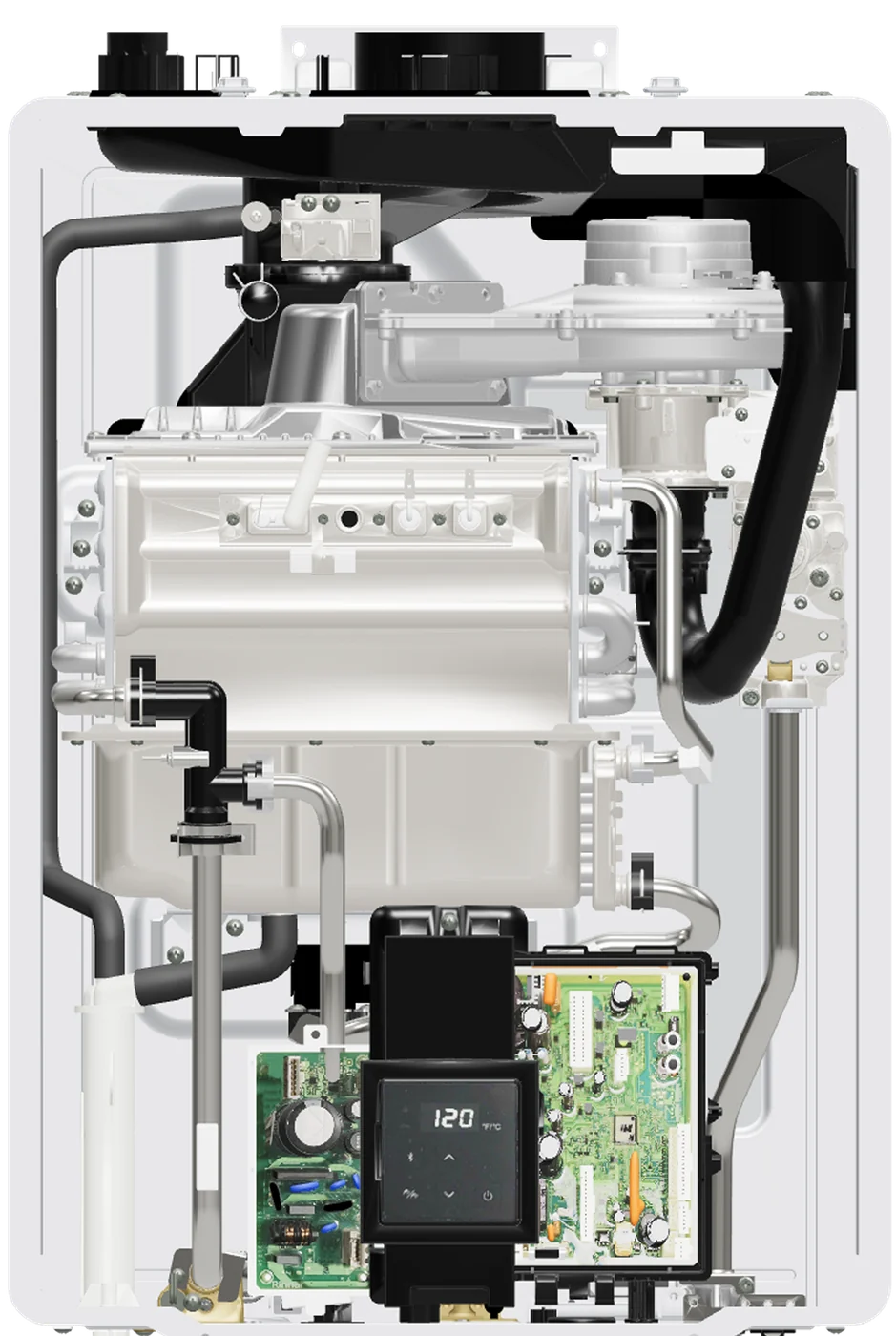
Inside the Sensei RXP
With the front cover off:
- Heat exchanger: where the water is heated, and where the leftover heat is taken out of the exhaust
- Fan and burner: a flow sensor and electronic water control keep the water at the set temperature
- Control boards: run the burner, the fan, the pump and the safety devices
Phone app
With Smart Connect you link your phone or tablet to the Sensei RXP over Bluetooth, using the Rinnai Central app. For Wi-Fi, Rinnai sells an optional wireless module (RWM200).
Quiet and compact
The RXP runs at about 48 to 49 dB and the cabinet is 18.5 x 25.8 x 11.4 in. The RE199iN is 14.05 in. wide. Both hang on the wall and free the floor space an old tank used.
Safety built in
Flame failure detection, boiling protection, a fan speed check, an over-current fuse and automatic frost protection come standard on both lines.
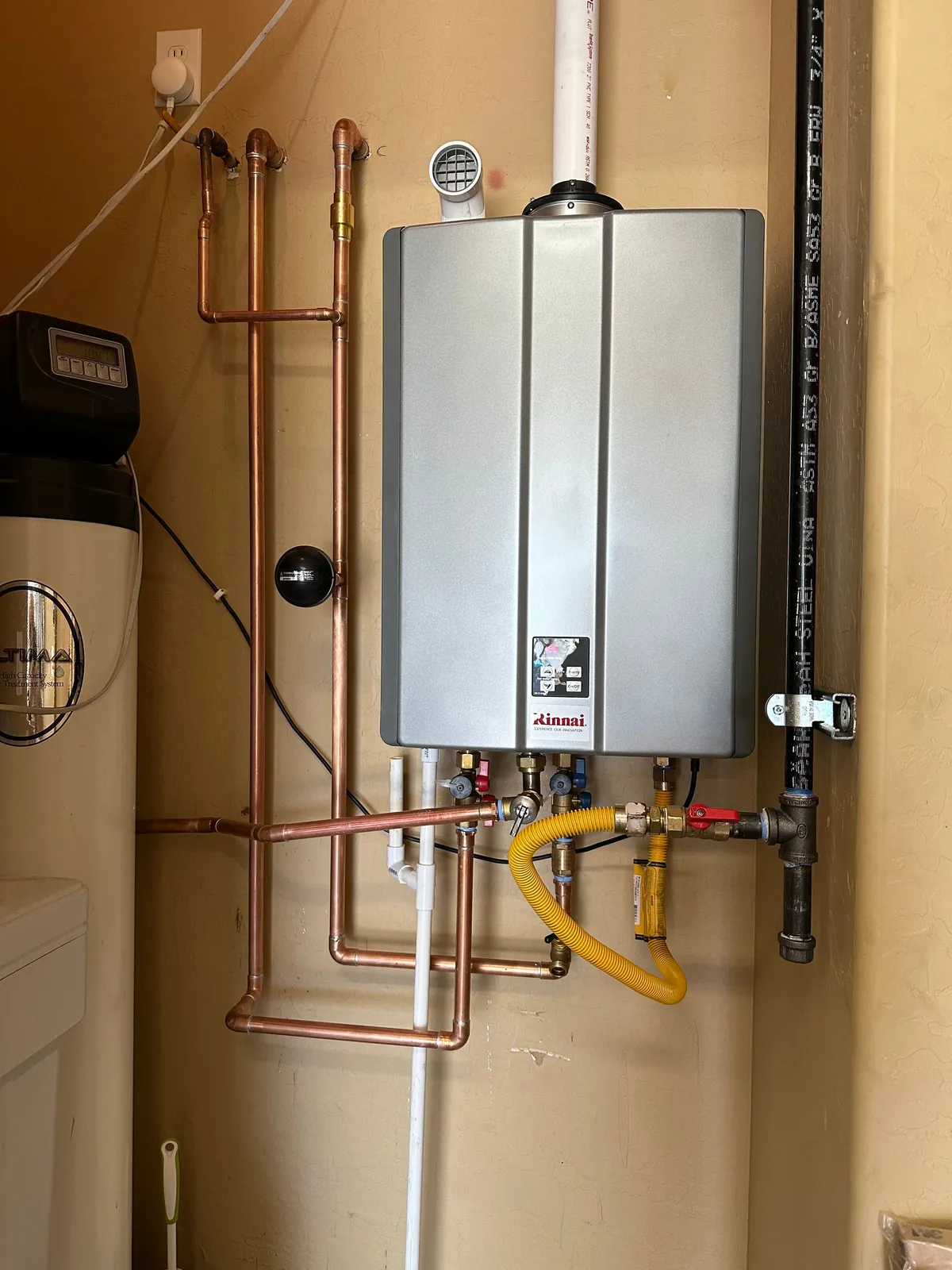
Installation
How we install your Rinnai
- Sizing to your home’s peak hot water demand
- Standard installation in the same location as the old water heater
- Rerouting the piping and new isolation valves
- Removal of the old water heater
- Training on how to operate your new system
- Our 3-year workmanship guarantee
Questions
Rinnai questions.
Not answered here? We pick up the phone Mon - Sat, 7:00 AM - 7:00 PM.
How Much Does Tankless Water Heater Installation Cost in Arizona?
The cost of installing a tankless water heater in Arizona depends on the equipment you choose, your home’s size, and your existing plumbing, gas line, and venting requirements. At Tankless Pros AZ, our Navien gas tankless water heater installations generally range from $3,400 to $6,300, depending on the model and installation requirements. We also install premium Rinnai systems. Every installation includes a professional evaluation and upfront pricing so you know what to expect before work begins.
What Size Tankless Water Heater Do I Need for My Home?
Choosing the right size tankless water heater depends on your home’s number of bathrooms, household size, and how many hot water fixtures may operate simultaneously. An undersized system may struggle to meet your family’s hot water demands, while an oversized system can add unnecessary expense. Tankless Pros AZ evaluates your household’s hot water usage and recommends the appropriate Navien or Rinnai tankless water heater for reliable, continuous hot water.
How Long Does a Tankless Water Heater Last, and Is It Worth the Investment?
A properly installed and maintained tankless water heater can last up to 20 years or longer, depending on water quality, usage, and maintenance. Compared with many traditional tank water heaters, tankless systems offer longer service life, improved energy efficiency, and on-demand hot water without maintaining a large tank of stored water. We install premium Navien and Rinnai systems designed for long-term performance and dependable comfort.
Does Arizona Hard Water Affect Tankless Water Heaters?
Arizona’s hard water contains naturally occurring minerals, such as calcium and magnesium, that can gradually accumulate inside a tankless water heater. With proper maintenance and the right water treatment, you can effectively manage these minerals. We recommend periodic professional descaling and offer solutions such as ScaleRx scale protection and Halo whole-home water filtration systems to help reduce mineral buildup, maintain efficiency, and protect your investment for years to come.
How Often Should a Tankless Water Heater Be Serviced or Descaled?
Most tankless water heater manufacturers recommend annual maintenance, although the frequency may vary depending on local water hardness and household usage. Professional tankless water heater maintenance typically includes flushing and descaling the heat exchanger, inspecting critical components, cleaning filters, and checking overall system operation. Because Arizona has particularly hard water, regular maintenance helps preserve efficiency, extend equipment life, and maintain reliable hot water.
Does a Tankless Water Heater Provide Instant Hot Water at Every Faucet?
A tankless water heater provides continuous hot water on demand, but it does not automatically deliver instant hot water at every faucet. Water must still travel through your home’s plumbing before reaching the fixture. Navien tankless water heaters equipped with ComfortFlow® recirculation technology can help reduce hot water wait times by keeping hot water readily available. Tankless Pros AZ can evaluate your plumbing layout and recommend the right recirculation solution for your home.
Related
Keep exploring.

Free quote
Get a price on a Rinnai.
Quick 15 minute or less reply. Mon - Sat, 7:00 AM - 7:00 PM.