Learning · Maintenance
Water Heater Maintenance
Yes, every water heater needs regular professional maintenance. In Phoenix hard water, most units should be serviced once a year.
What every water heater gets
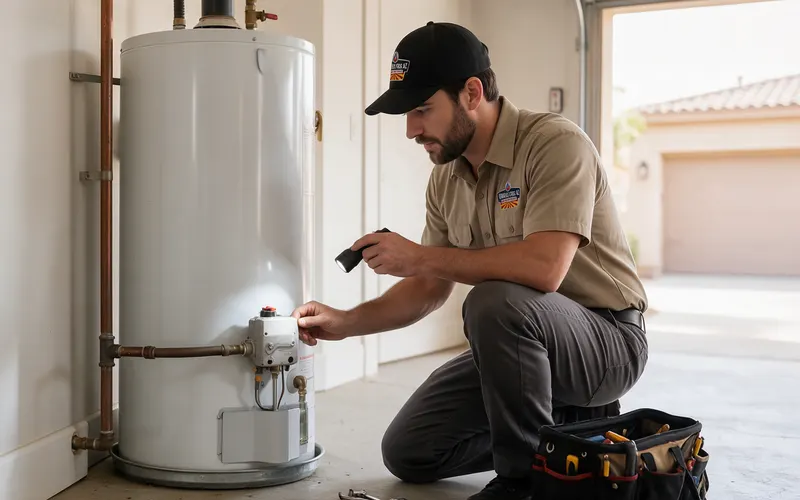
- Full visual inspection of accessible components
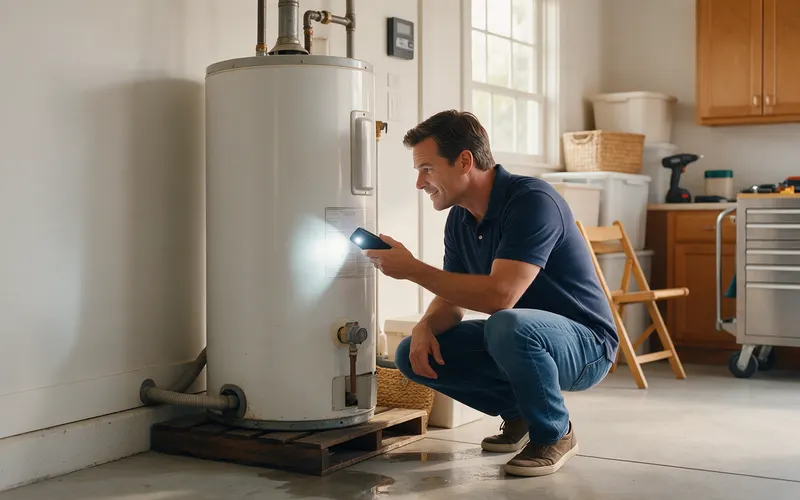
- Age check from the manufacturer date code or serial number
- Temperature controls tested for proper start and stop
- Leak check: water and, where applicable, gas
- Temperature & pressure (T&P) relief valve inspection and test
- Thermostat calibration and gauge verification
- Review of current manufacturer service bulletins
Plus, by type of water heater
Gas tank-type water heaters
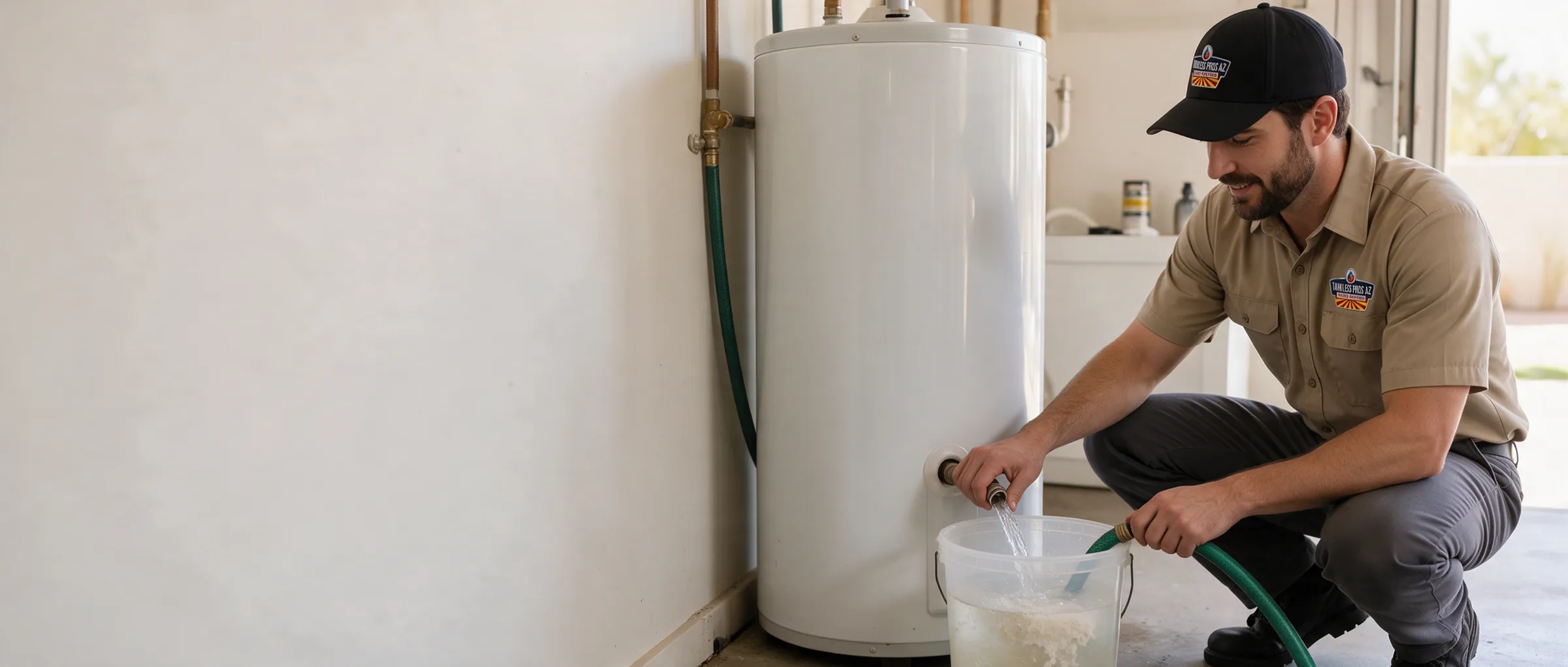
- Full-pressure tank flush to remove sediment and minerals from the bottom
- Inspection and cleaning of the gas drip leg (sediment trap)
- Burner assembly and pilot or electronic ignition cleaning and inspection
- Flue vent check: alignment, secure fittings, unrestricted flow
- Carbon monoxide leak test
- Anode rod inspection (the sacrificial rod that protects the tank from corrosion)
- Thermal expansion evaluation, especially on closed plumbing systems
Electric tank-type water heaters
- Full-pressure tank flush to remove sediment
- Heating elements checked for scale, continuity and resistance
- Upper and lower thermostats tested and calibrated
- Electrical connection, wiring and amperage draw safety check
- Anode rod inspection
Gas tankless water heaters
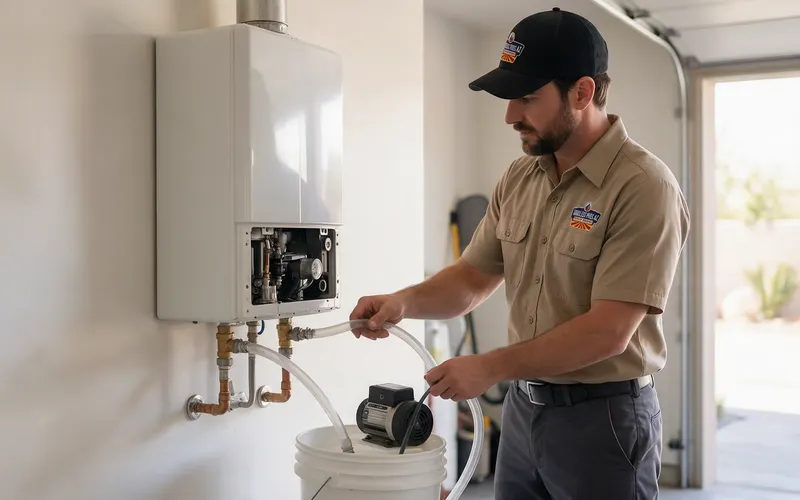
- Heat exchanger descaling and flush: critical in hard water, where scale restricts flow and can destroy the exchanger
- Inlet water filter or screen cleaned or replaced
- Burner, combustion fan and exhaust components inspected and cleaned
- Gas pressure and manifold pressure verified
- Flow sensor, temperature sensor and error-code history review
- Venting checked for termination, slope, clearances and unrestricted flow
- Condensate drain check on condensing models
- Combustion performance evaluation when indicated
Bet you didn’t know
When water in a tank reaches roughly 120°F and higher, dissolved minerals, especially the calcium and magnesium that are abundant in Arizona water, rapidly drop out of solution. Regular professional maintenance removes the buildup, restores efficiency and routinely adds years of service.
What the minerals do to each type
- Tank water heaters
- Minerals settle as a layer of sediment on the bottom. It acts like insulation: the burner or elements work harder and longer, efficiency drops, the tank gets louder and its life is shortened.
- Gas tankless
- Minerals form hard scale in the narrow passages of the heat exchanger. Scale restricts flow, reduces output, triggers error codes and can eventually crack or clog the exchanger, an expensive failure that annual descaling almost always prevents.
- Electric tanks
- Scale coats the heating elements, reducing heat transfer and making them overheat and fail early.
What it costs
- Level-1 tankless descaling & serviceFree quote
- Level-4 tankless descaling & serviceFree quote
- Tank water heater service$159
Tankless Pros AZ
Time for a service?
- A year or more since the last service
- The tank rumbles or pops
- A tankless shows a scale or temperature error
- Less hot water than it used to give
Mon - Sat, 7:00 AM - 7:00 PM
Keep reading
Related guides.
-
 Service · Tankless repairTankless repair & serviceSymptoms, common faults and what a tankless service includes.
-
 TroubleshootingNo hot waterFour simple checks to try before you call.
-
 ReplacementWater heater ageRead the age from the serial number and know when to replace.
-
 Service · Gas repairGas water heater repairWarning signs, the annual maintenance checklist, and repair or replace.
Free quote
Schedule your water heater service.
Quick 15 minute or less reply. Mon - Sat, 7:00 AM - 7:00 PM.