Learning · Tankless
Pros & Cons of a Gas Tankless Water Heater
An honest review for Phoenix homes, where hard water and heat are hard on tank water heaters.

The pros
Endless supply of hot water
There is no storage tank. The unit heats water only when you need it, brings it to all your faucets quickly, and never runs out.
Energy savings
A tank heats water every hour of the year, whether or not you need it. With a gas tankless, about 97 cents of every dollar you spend heats your water; with a tank, only about 55 cents does, and 45 cents is wasted.
Space savings
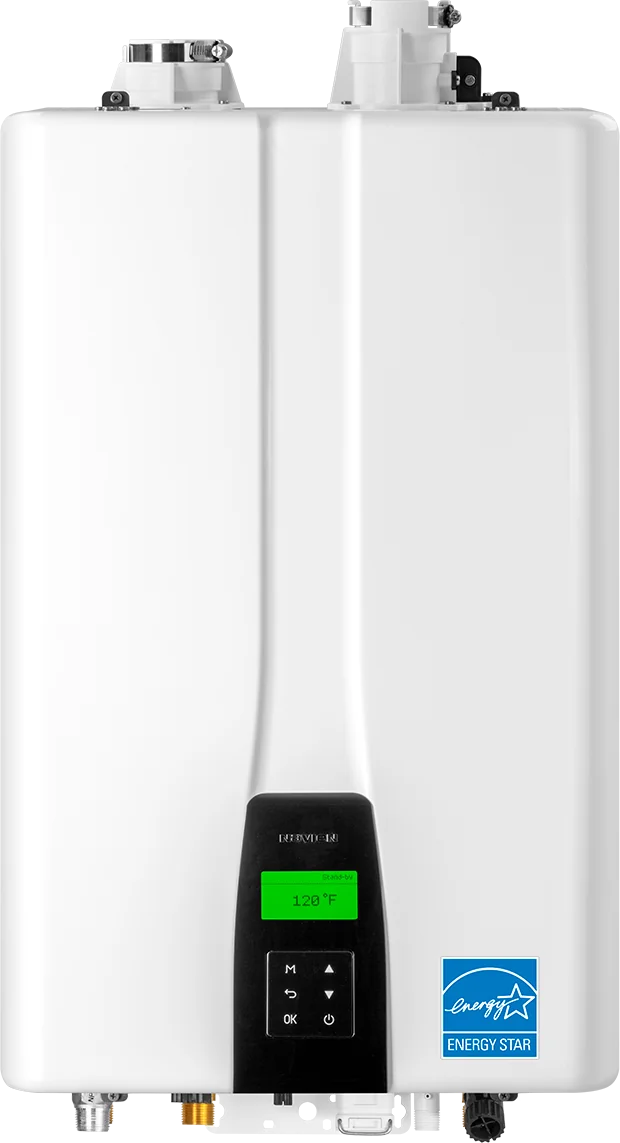
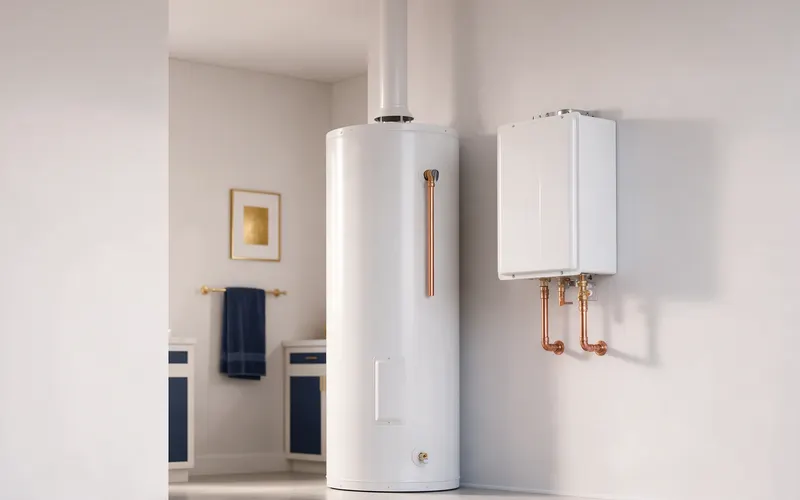
A typical tank is about 24" in diameter and 60" tall. A Navien tankless is the size of a carry-on suitcase: about 18" wide, 26" long and 11" deep.
Longer product life
A tankless can cost more, but you get far more life from it: a tank lasts 8 to 12 years in the Phoenix area, a gas tankless 20 years or more with proper maintenance.
Peace of mind
An average tank holds about 50 gallons. If it leaks, that can mean a huge mess and water damage. A tankless can only leak like a dripping faucet.
No stale water
There are no 50 gallons sitting in a tank. A tankless always pulls fresh water.
The cons, and how we handle them
No hot water during power outages (there is a solution)
A gas tankless uses electronic ignition instead of a standing pilot, so it needs a little electricity. If outages are frequent where you live, a backup battery, like a computer battery backup, keeps the hot water on.
Output challenges
A properly sized unit will not have them. The unit’s capacity has to match your family’s demand, which is why choosing the right installer matters.
Higher upfront cost
The equipment costs more, and installing it properly takes a true professional. Our Navien factory-trained technicians get it right. See our prices.
Phoenix hard water: tank vs tankless
Phoenix water averages about 15 grains per gallon. Heated, it leaves limescale and sediment, and the heater’s design decides how bad the buildup gets.
- Tank-type
- Stores 30 to 80 gallons kept hot by the burner. Minerals scale the walls, burner and anode rod and settle as sediment. Water softeners, common in Phoenix, wear anode rods out faster, so tanks often fail in 6 to 10 years.
- Gas tankless
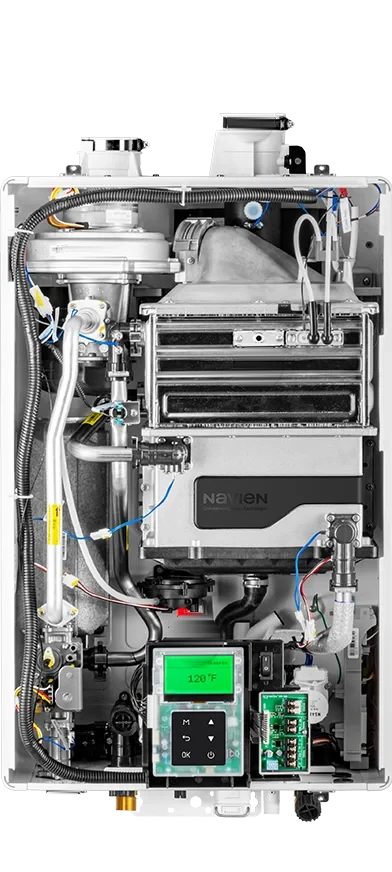
- Heats on demand through the heat exchanger, so there is little time for minerals to settle and no anode rod to wear out. Scale forms only in the exchanger and is removed by descaling.
Tip: pair a tankless with a water softener or scale inhibitor such as ScaleRx or Halo filtration to slow the buildup.
Key comparisons for Phoenix
- Efficiency
- Gas tankless reaches up to 0.97 UEF; tanks are about 0.60 to 0.70. There are no standby losses.
- Lifespan
- A tankless lasts 20 years or more with descaling; in Phoenix hard water, anode rod depletion often ends a tank’s life early.
- Installation and space
- A tank installs faster (2 to 3 hours) than a tankless (4 to 5 hours), but the tankless saves floor space, which matters on tight lots.
- Performance
- Tankless gives endless hot water for large families and pool or spa homes; tanks falter at peak times like morning showers.
- Health
- Tank sediment can harbor Legionella bacteria if the water is kept below 125°F. A tankless has no standing water.
Tankless Pros AZ
Interested in a gas tankless?
- Free advice and helpful hints by phone. Ask for Victoria.
- Sized to your family’s demand
- Installed by Navien factory-trained technicians
Mon - Sat, 7:00 AM - 7:00 PM
Keep reading
Related guides.
-
 CompareTank vs tanklessThe honest pros and cons of each, side by side.
-
 TanklessHow a tankless worksStep by step inside a Navien NPE-A2 condensing tankless.
-
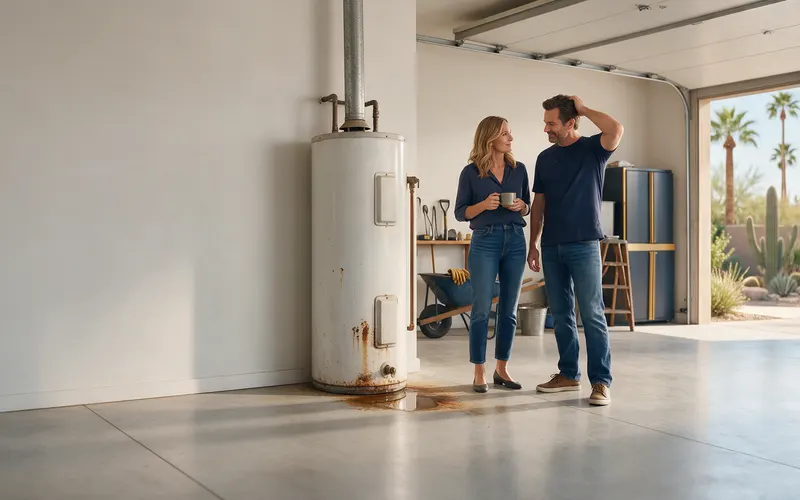 UpgradesWhen to upgradeSeven signs it is time to replace a tank with a tankless.
-
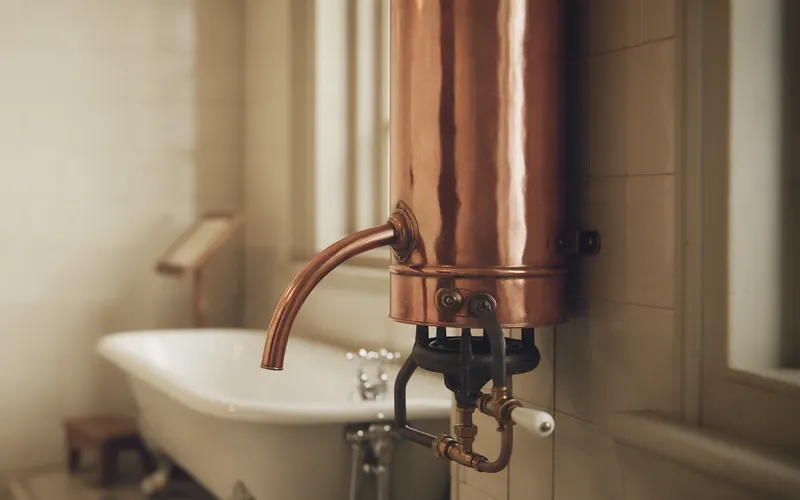 HeritageHistory of tanklessFrom the Gas Geyser of 1868 to today’s condensing units.
Free quote
Talk tankless with a pro.
Quick 15 minute or less reply. Mon - Sat, 7:00 AM - 7:00 PM.